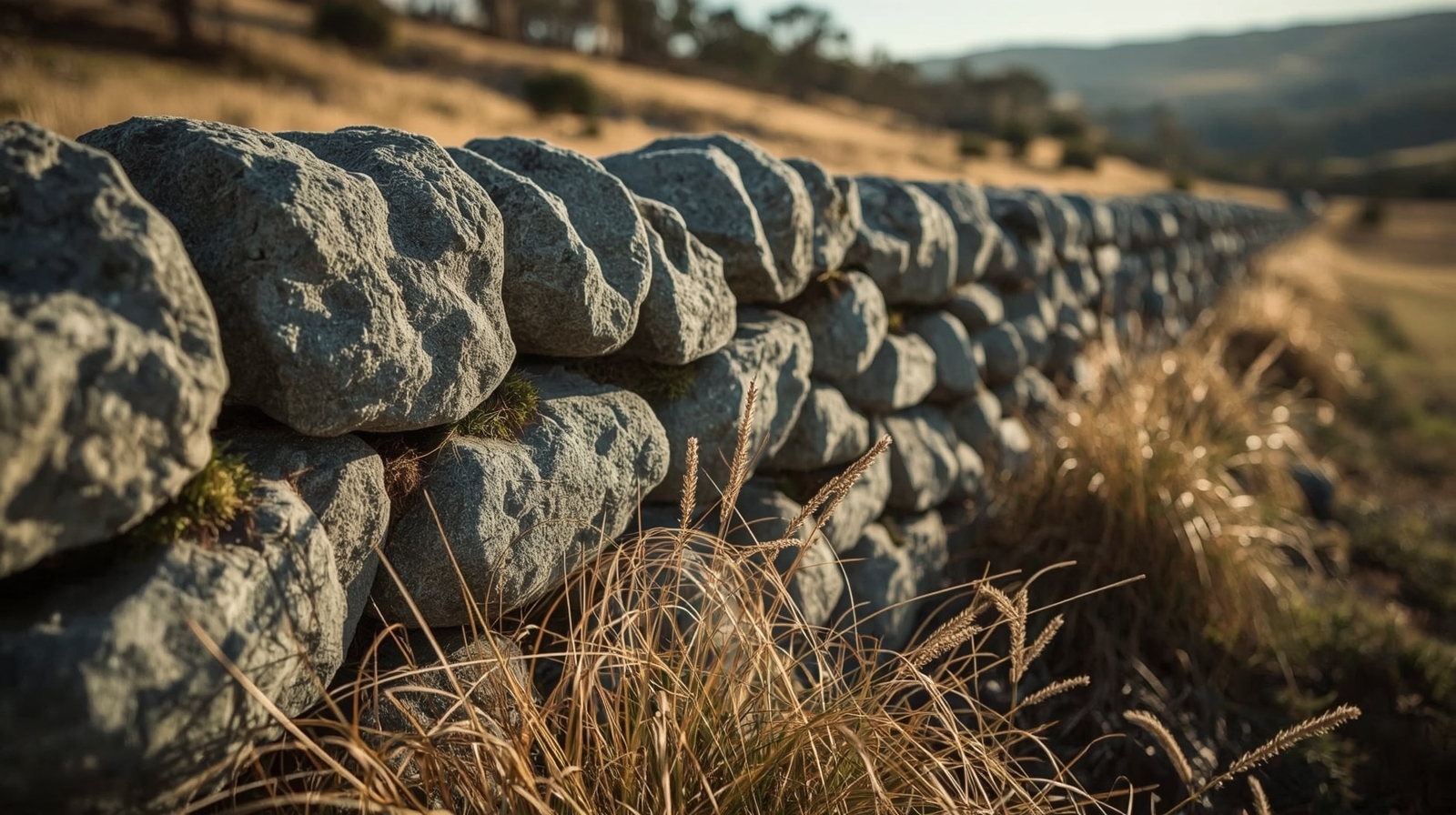
A working farm doesn't want a garden that knows it's a garden.
Ruth Hartley had stopped expecting it to work.
They'd tried twice in the decade since they'd bought the property — a homestead on the Coal River Valley floor, seventy acres of working paddock, federation-era stone walls along the eastern boundary. Both times, the result had lasted a season before it started looking wrong. Too considered. Too separate from the land surrounding it. Like something placed on the property rather than part of it.
"We assumed it was us," she says. "That we just couldn't articulate what we wanted."
It wasn't them.
The problem was the brief. A garden on a working property can't borrow from the language of residential landscaping — ornamental beds, clipped hedges, planting selected for colour and seasonal interest. The land immediately beyond the fence line is functional and undecorated. Anything that reads as designed will look stranded against it.
Will walked the site twice before he said much. The existing stone walls predated the house by forty years — dry-laid, settled, with the particular quality that comes from material and time working together. The drainage fall ran south-east toward a natural low point in the paddock. The prevailing westerly came across open ground with nothing between the garden and the ridge line to slow it.
These weren't constraints to design around. They were the structure the garden needed to follow.
He extended the stone walls using material salvaged from a collapsed boundary section on the eastern edge of the property — same stone, same technique, same pace. Planting followed the drainage fall rather than fighting it: native grasses, low groundcover species, nothing that would need replacing in a hard summer or irrigating through a dry one. No imported soil. No species that didn't already know how to live in this valley.
The work took eleven weeks. There was no dramatic reveal.
"It just looked right. Not finished. Right. Like it had been there for a long time."
— R. and S. Hartley, Richmond
Three years on, the garden has darkened and settled the way the original walls did. The westerly moves through the grasses rather than hitting a fence. In summer it reads as part of the paddock. In winter the structure holds.
The Hartleys no longer notice the boundary where the garden ends and the farm begins.
That was the point.